day 1
Fast For Life
Jan 18 2026
2 Samuel 12:16 (NIV) - David pleaded with God for the child. He fasted and spent the nights lying in sackcloth on the ground.
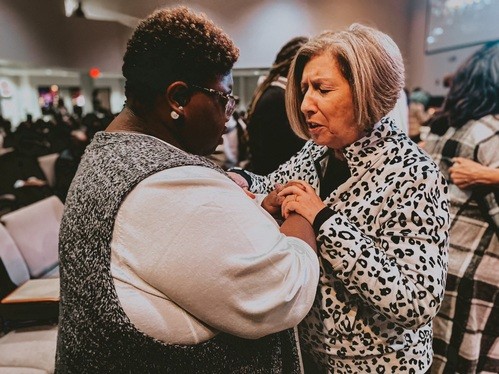
Have you ever prayed so much for a person dear to you who is far away from God that it drove you to do some extraordinary things? Has one of those extraordinary things been fasting? In Episode 1 of the Lost Art of Fasting podcast, the importance of having a strong "why" as a motivating factor in fasting is discussed. Oftentimes, people get distracted from and lose motivation for fasting because they don’t have a strong enough why to anchor them. In fact, your prayer and fasting can complement each other. When you need motivation to fast, you pray for that loved one. When you need motivation to keep praying, you fast. Perhaps during this church wide fast, focusing on a loved one you want to see God save will strengthen your fasting time.
In 2 Samuel 12, King David is confronted with his sin of having Uriah killed after David committed adultery with Uriah’s wife. The prophet Nathan confronts the king with his sin, and the penalty from God is the death of the son that David’s sin produces. In verse 16, David begins to fast for the life of the child. Even though the child still dies, the power of the child’s life places a determination in David to consecrate himself before the Lord. In verse 22, David explains his reasons for fasting by stating, “...perhaps the Lord will be gracious to me and let the child live.”
God’s grace in someone’s life is a powerful reason to fast. Who has God called for you to begin to pray and fast for? How might the Lord be gracious to you and them and save their life by your willingness to consecrate yourself before the Lord? Maybe it’s someone you’ve been praying for a long time. It could be someone you work with or live around. Whomever it might be, perhaps God is using this extraordinary fast to provide grace in someone’s life.
ACTION STEP: Write down the name of someone you’ve been praying for and prepare to bring that name to the Prayer Summit on January 31 for our community to pray over.
In 2 Samuel 12, King David is confronted with his sin of having Uriah killed after David committed adultery with Uriah’s wife. The prophet Nathan confronts the king with his sin, and the penalty from God is the death of the son that David’s sin produces. In verse 16, David begins to fast for the life of the child. Even though the child still dies, the power of the child’s life places a determination in David to consecrate himself before the Lord. In verse 22, David explains his reasons for fasting by stating, “...perhaps the Lord will be gracious to me and let the child live.”
God’s grace in someone’s life is a powerful reason to fast. Who has God called for you to begin to pray and fast for? How might the Lord be gracious to you and them and save their life by your willingness to consecrate yourself before the Lord? Maybe it’s someone you’ve been praying for a long time. It could be someone you work with or live around. Whomever it might be, perhaps God is using this extraordinary fast to provide grace in someone’s life.
ACTION STEP: Write down the name of someone you’ve been praying for and prepare to bring that name to the Prayer Summit on January 31 for our community to pray over.

day 2
Jan 20 2025
A Mantra FOr Your Fast
Psalm 28:7 (NLT) - The LORD is my strength and shield. I trust him with all my heart. He helps me, and my heart is filled with joy. I burst out in songs of thanksgiving.
Have you ever wondered what people were dealing with when they were writing certain things in scripture? It's a gut punch when you realize that when Paul says, "Rejoice in the Lord always, again I say rejoice!" in Philippians 4:4, he was imprisoned in a Roman jail. When Jesus says, "Forgive them for they know not what they do" (Luke 23:34), he was hanging on a cross, about to take his last breath. In today's text, David faced persecution and was reviled against.
For these three pillars of the faith, and many others, there are consistent themes that recur despite their circumstances. A question to ask yourself now is – what are your consistent themes? When you are in distress, feeling abandoned, persecuted, or falsely accused, do you revert to the flesh, muttering curses under your breath, pointing the finger at others, responding with shameful comments, or do you boast in the Lord?
Today's scripture is a consistent refrain for David in all kinds of circumstances. It's also a rallying cry for those in times of consecration. In many moments of fasting throughout scripture, you will find people placing their confidence in the Lord as their strength and shield. They discover their life is filled with joy when their stomach is empty. They burst out in praise, not in complaints. It's a mantra they all fall back on, whether or not they use these specific words.
Here's your call to action: Either find a portion of scripture that you will declare as your grounding place during this fast, or create a mantra, using scripture as a base to stand on and declare in times of plenty or times of lack during this fast. Maybe you can start with Psalm 28:7 and build from there. Use this mantra as a "Ground Zero" when your stomach growls, or when you can't seem to get your phone out of your mind. Come back to this scripture or statement when you need to command your flesh to realign with your spirit. Perhaps it will remain with you beyond this fast into every circumstance where your flesh tries to rise up against the knowledge and goodness of Christ, proving that good and perfect gift of God in the inside of you!
ADDITIONAL ACTION STEP: Challenge someone else to share their mantra with you. Use it as an opportunity to grow one another and hold each other accountable.
For these three pillars of the faith, and many others, there are consistent themes that recur despite their circumstances. A question to ask yourself now is – what are your consistent themes? When you are in distress, feeling abandoned, persecuted, or falsely accused, do you revert to the flesh, muttering curses under your breath, pointing the finger at others, responding with shameful comments, or do you boast in the Lord?
Today's scripture is a consistent refrain for David in all kinds of circumstances. It's also a rallying cry for those in times of consecration. In many moments of fasting throughout scripture, you will find people placing their confidence in the Lord as their strength and shield. They discover their life is filled with joy when their stomach is empty. They burst out in praise, not in complaints. It's a mantra they all fall back on, whether or not they use these specific words.
Here's your call to action: Either find a portion of scripture that you will declare as your grounding place during this fast, or create a mantra, using scripture as a base to stand on and declare in times of plenty or times of lack during this fast. Maybe you can start with Psalm 28:7 and build from there. Use this mantra as a "Ground Zero" when your stomach growls, or when you can't seem to get your phone out of your mind. Come back to this scripture or statement when you need to command your flesh to realign with your spirit. Perhaps it will remain with you beyond this fast into every circumstance where your flesh tries to rise up against the knowledge and goodness of Christ, proving that good and perfect gift of God in the inside of you!
ADDITIONAL ACTION STEP: Challenge someone else to share their mantra with you. Use it as an opportunity to grow one another and hold each other accountable.
day 3
Jan 20 2026
Fast Ye For Me
Esther 4:15-16 (NLT) - Then Esther sent this reply to Mordecai: “Go and gather together all the Jews of Susa and fast for me. Do not eat or drink for three days, night or day. My maids and I will do the same. And then, though it is against the law, I will go in to see the king. If I must die, I must die.”
How difficult is it to take your own advice? Oftentimes, we can give better counsel to others than we do ourselves. Why? Psychologists Igor Grossman and Ethan Kross refer to it as “Solomon’s Paradox.” Their 2014 research is based on the life of King Solomon. Widely regarded as the wisest man to ever live (and potentially the richest as well), Solomon could give legendary advice and wisdom, but at the end of his life, he was unable to live out those ideals, failing as his own sage. Just read Ecclesiastes and Songs of Solomon to see how this proves true. Similarly, you might find it challenging to fast for yourself. We might see the benefits of fasting for someone else who is navigating a difficult situation. Still, for ourselves, we likely have a great struggle. Why don’t we use this to our advantage?
In the book of Esther, Haman, the most powerful official under King Xerxes, launched a plot to kill all Jews. Mordecai, an official who had gained favor with the King, knew that the only hope was for Esther, the Queen, who was also a Jew, to go before the King to foil the plot. According to custom, going to the King without an invitation could cost her life. Weighing the lives of all Jews and her own, she invited Mordecai and all Jews to fast for her, so she might have the strength to do what is righteous.
In episode 2 of the Lost Art of Fasting, the advice was given to invite someone to fast with you. This very story in scripture was cited in the podcast. Esther was stronger because she had thoughts and a passion for others that went beyond herself. The same became true as others fasted on her behalf, having wisdom and strength for someone else above their own wants and means. Perhaps you can already see that you might fall into a “Solomon’s Paradox” situation if you attempt to develop wisdom and motivation on this fast, based solely on yourself. However, you are already thinking about someone else in your life that if you fast for them, it would be highly motivational. Maybe if you have someone connect their fasting journey to yours, you’ll develop the momentum to press on toward the thing that you don’t believe you will attain on your own.
ACTION STEP: Partner your fast with or for someone else. Find an accountability partner who will either fast with or for you. Use it as fuel for your fast.
In the book of Esther, Haman, the most powerful official under King Xerxes, launched a plot to kill all Jews. Mordecai, an official who had gained favor with the King, knew that the only hope was for Esther, the Queen, who was also a Jew, to go before the King to foil the plot. According to custom, going to the King without an invitation could cost her life. Weighing the lives of all Jews and her own, she invited Mordecai and all Jews to fast for her, so she might have the strength to do what is righteous.
In episode 2 of the Lost Art of Fasting, the advice was given to invite someone to fast with you. This very story in scripture was cited in the podcast. Esther was stronger because she had thoughts and a passion for others that went beyond herself. The same became true as others fasted on her behalf, having wisdom and strength for someone else above their own wants and means. Perhaps you can already see that you might fall into a “Solomon’s Paradox” situation if you attempt to develop wisdom and motivation on this fast, based solely on yourself. However, you are already thinking about someone else in your life that if you fast for them, it would be highly motivational. Maybe if you have someone connect their fasting journey to yours, you’ll develop the momentum to press on toward the thing that you don’t believe you will attain on your own.
ACTION STEP: Partner your fast with or for someone else. Find an accountability partner who will either fast with or for you. Use it as fuel for your fast.
day 4
Jan 21 2026
Reshaping your life
Joel 3:10 (ESV) “Beat your plowshares into swords, and your pruning hooks into spears; let the weak say, ‘I am a warrior.’”
Joel’s words are striking. Tools meant for cultivation are reshaped into weapons, and those who feel weak are commanded to declare strength. This is not a call to human aggression, but a summons to spiritual readiness. God is calling His people to prepare themselves for a divine encounter, a moment when complacency must give way to devotion.
Fasting is one way that we, as believers, obey this call. When we fast, we set aside what is ordinary and necessary, such as food, comfort, and routine, and lay them down before God. Just as plowshares were turned into swords, fasting transforms daily dependence into spiritual focus. What once sustained the body now fuels the soul through prayer, surrender, and attunement to God’s voice. Fasting also speaks directly to the second half of Joel’s command: “let the weak say, ‘I am a warrior.’” When we deny ourselves, we confront our weakness. Hunger reminds us of our fragility, our easy distraction, and our deep dependence. Yet fasting does not leave us powerless. Instead, it invites God’s strength to fill the empty spaces we create. In fasting, weakness becomes a doorway for divine power.
Throughout the Word, fasting precedes moments of breakthrough, repentance, deliverance, guidance, and renewal. It is not a way to earn God’s favor, but a posture that aligns our hearts with His purpose. Fasting sharpens spiritual vision, quiets competing desires, and prepares us for the battles we cannot fight in our own strength.
Joel’s message reminds us that seasons of preparation matter. There are times when God calls His people to set aside normal rhythms and ready themselves for spiritual conflict. Fasting is not about depravity. Instead, it is about transformation, just like the pruning hook is transformed into a spear. Fasting trains us to trust God more deeply and declare, even in weakness, that we are strong in Him. When we fast, we are not retreating. We are gearing up. We lay down what feeds the flesh so that faith may rise, and the weak may stand boldly as warriors in the strength of the Lord.
ACTION STEP: Identify something in your life that needs to be transformed and take some time today to lay it at the Lord’s feet and allow him to transform you and the life he has entrusted you with.
Fasting is one way that we, as believers, obey this call. When we fast, we set aside what is ordinary and necessary, such as food, comfort, and routine, and lay them down before God. Just as plowshares were turned into swords, fasting transforms daily dependence into spiritual focus. What once sustained the body now fuels the soul through prayer, surrender, and attunement to God’s voice. Fasting also speaks directly to the second half of Joel’s command: “let the weak say, ‘I am a warrior.’” When we deny ourselves, we confront our weakness. Hunger reminds us of our fragility, our easy distraction, and our deep dependence. Yet fasting does not leave us powerless. Instead, it invites God’s strength to fill the empty spaces we create. In fasting, weakness becomes a doorway for divine power.
Throughout the Word, fasting precedes moments of breakthrough, repentance, deliverance, guidance, and renewal. It is not a way to earn God’s favor, but a posture that aligns our hearts with His purpose. Fasting sharpens spiritual vision, quiets competing desires, and prepares us for the battles we cannot fight in our own strength.
Joel’s message reminds us that seasons of preparation matter. There are times when God calls His people to set aside normal rhythms and ready themselves for spiritual conflict. Fasting is not about depravity. Instead, it is about transformation, just like the pruning hook is transformed into a spear. Fasting trains us to trust God more deeply and declare, even in weakness, that we are strong in Him. When we fast, we are not retreating. We are gearing up. We lay down what feeds the flesh so that faith may rise, and the weak may stand boldly as warriors in the strength of the Lord.
ACTION STEP: Identify something in your life that needs to be transformed and take some time today to lay it at the Lord’s feet and allow him to transform you and the life he has entrusted you with.
day 5
Jan 22 2026
Spiritual Muscle Memory
Luke 4:1-2 (NKJV) - Then Jesus, being filled with the Holy Spirit, returned from the Jordan and was led by the Spirit into the wilderness, being tempted for forty days by the devil.”
Have you ever asked, “God, why me? Why now?” As 2026 begins, it might already feel like it is battering or bothering you. Maybe you started the fast strong, but then something unexpected happened: bad news, tension in your marriage, a health scare, or a work situation that arose out of nowhere. Life is full of curveballs, and following Jesus does not remove them.
In Luke 4, Jesus steps into one of the hardest moments of His earthly life right after beginning His ministry. He is baptized in the Jordan River, and the Father publicly affirms Him. (Luke 3:21–22) Then everything seems to shift. Scripture says, “Then Jesus, being filled with the Holy Spirit, returned from the Jordan and was led by the Spirit into the wilderness, being tempted for forty days by the devil.” (Luke 4:1–2 NKJV) Instead of being led into comfort, He is led straight into testing.
That feels like a curveball. After such a powerful spiritual moment, most of us expect blessings, open doors, and ease—not a wilderness season and confrontation with the enemy. Yet Jesus shows that temptation and trials are not signs of God’s absence but part of walking in God’s purpose. So how did Jesus stand firm under pressure? He had what could be called spiritual “muscle memory.” Muscle memory is “the ability to reproduce a particular movement without conscious thought, acquired as a result of frequent repetition of that movement.” When the enemy came at Him, Jesus did not scramble to figure out what to say. He already knew how to respond.
The Word of God was so deeply rooted in Him that it became his automatic response. That same pattern is available to you. Obstacles will come, but the key to overcoming them is your perspective and your preparation. During this fast, think of each day as training time. You are building spiritual muscle memory by returning to God’s Word again and again.
Here are a few practical ways to build that muscle memory in this season:
- Choose a daily reading plan or audio Bible and commit to it, even on busy days.
- Pick one verse from your reading to memorize and repeat throughout the day.
- When a “curveball” comes, pause and ask, “What does God’s Word say about this?” before reacting.
God’s Word is living and active. It will steady your heart, sharpen your perspective, and train your responses when life throws the unexpected your way. As you walk through this fast, may your reflex move from worry to the Word, from panic to prayer, and from frustration to faith-filled obedience.
In Luke 4, Jesus steps into one of the hardest moments of His earthly life right after beginning His ministry. He is baptized in the Jordan River, and the Father publicly affirms Him. (Luke 3:21–22) Then everything seems to shift. Scripture says, “Then Jesus, being filled with the Holy Spirit, returned from the Jordan and was led by the Spirit into the wilderness, being tempted for forty days by the devil.” (Luke 4:1–2 NKJV) Instead of being led into comfort, He is led straight into testing.
That feels like a curveball. After such a powerful spiritual moment, most of us expect blessings, open doors, and ease—not a wilderness season and confrontation with the enemy. Yet Jesus shows that temptation and trials are not signs of God’s absence but part of walking in God’s purpose. So how did Jesus stand firm under pressure? He had what could be called spiritual “muscle memory.” Muscle memory is “the ability to reproduce a particular movement without conscious thought, acquired as a result of frequent repetition of that movement.” When the enemy came at Him, Jesus did not scramble to figure out what to say. He already knew how to respond.
The Word of God was so deeply rooted in Him that it became his automatic response. That same pattern is available to you. Obstacles will come, but the key to overcoming them is your perspective and your preparation. During this fast, think of each day as training time. You are building spiritual muscle memory by returning to God’s Word again and again.
Here are a few practical ways to build that muscle memory in this season:
- Choose a daily reading plan or audio Bible and commit to it, even on busy days.
- Pick one verse from your reading to memorize and repeat throughout the day.
- When a “curveball” comes, pause and ask, “What does God’s Word say about this?” before reacting.
God’s Word is living and active. It will steady your heart, sharpen your perspective, and train your responses when life throws the unexpected your way. As you walk through this fast, may your reflex move from worry to the Word, from panic to prayer, and from frustration to faith-filled obedience.
day 6
Jan 23
2026
Fan fasting into flame
2 Timothy 1:6-7 (NLT) - This is why I remind you to fan into flames the spiritual gift God gave you when I laid my hands on you. For God has not given us a spirit of fear and timidity, but of power, love, and self-discipline.
If you’ve never started a fire at a campground or bonfire, it’s more than just simply striking a match. Starting the fire is one thing, but to keep it hot, bright, and fueled, you must use something that will blow air over the fire so it will spread. This is the metaphor that Paul uses to encourage young Timothy in his second letter to him. We cannot expect to remain motionless and stagnant in life to see the gift in God grow. We must add elements that will be like a wind blowing over what is already lit in us. This is what fasting is in our lives.
In episode 3 of the Lost Art of Fasting podcast, the spiritual blessings of fasting are discussed. We will never see the blessing of fasting if we walk in fear and timidity. During this fast, you should experience a deepening and heightening of the gift of God on your life. If you don’t know how God has gifted you, you may very well discover that gift during this fasting time. Your fast will act as this fan that will fuel the gift of God in you. However, if you are experiencing fear and timidity in this fast, realize this is not of or from the Lord. In fact, this may be from the enemy attempting to distract you or distort you.
What is interesting is that in v.8 of this text, Paul admonished Timothy to not be ashamed to share the Lord with others. As a church, we are entering into a season of prayer at the 2026 Prayer Summit, where we will seek the Lord to be “Beacons” that light the way to the Lord, both individually and as a church. Fasting can be an excellent way to reveal what makes us fearful and timid in telling people about the Lord. Fasting can fan into flame a boldness to declare the goodness of God. Fasting can also be a great, easy conversation starter about the impact the Lord is having on your life. If someone notices you’re not eating or on social media, your powerful, loving response can be a testimony of the self-discipline of the Lord in your life. It could be a powerful invitation into who God is.
This fast might be precisely what you need to fan into flame the gift of God. Allow the Lord to burn in you during this fasting time!
ACTION STEP: Find someone to introduce the topic of fasting to. Don’t force anything. Naturally, see where the conversation goes, but pray the Lord will allow you an opportunity to share Him with someone.
In episode 3 of the Lost Art of Fasting podcast, the spiritual blessings of fasting are discussed. We will never see the blessing of fasting if we walk in fear and timidity. During this fast, you should experience a deepening and heightening of the gift of God on your life. If you don’t know how God has gifted you, you may very well discover that gift during this fasting time. Your fast will act as this fan that will fuel the gift of God in you. However, if you are experiencing fear and timidity in this fast, realize this is not of or from the Lord. In fact, this may be from the enemy attempting to distract you or distort you.
What is interesting is that in v.8 of this text, Paul admonished Timothy to not be ashamed to share the Lord with others. As a church, we are entering into a season of prayer at the 2026 Prayer Summit, where we will seek the Lord to be “Beacons” that light the way to the Lord, both individually and as a church. Fasting can be an excellent way to reveal what makes us fearful and timid in telling people about the Lord. Fasting can fan into flame a boldness to declare the goodness of God. Fasting can also be a great, easy conversation starter about the impact the Lord is having on your life. If someone notices you’re not eating or on social media, your powerful, loving response can be a testimony of the self-discipline of the Lord in your life. It could be a powerful invitation into who God is.
This fast might be precisely what you need to fan into flame the gift of God. Allow the Lord to burn in you during this fasting time!
ACTION STEP: Find someone to introduce the topic of fasting to. Don’t force anything. Naturally, see where the conversation goes, but pray the Lord will allow you an opportunity to share Him with someone.
day 7
Jan 24 2026
Hearing the voice of God
Acts 13:2-3 (NLT) - One day as these men were worshiping the Lord and fasting, the Holy Spirit said, “Appoint Barnabas and Saul for the special work to which I have called them.” So after more fasting and prayer, the men laid their hands on them and sent them on their way.
Nothing could be more amazing during this fast than to have a definitive Word from God. The Bible says that the Word is a lamp to our feet and a light to our path (Psalm 119:105). This is what we want when we need to know where to go or where the Lord is leading us. It gives us confidence and full assurance of faith (Hebrews 10:22). The Bible also contrasts the Word with food, saying “...man does not live on bread alone, but on every word that comes from the mouth of God” (Deuteronomy 8:3). This would be helpful if you are on a food fast, right? But more deeply, a Word from God is satisfying, filling, and gives you the strength, energy, and motivation to live, move, and have your being (Acts 17:28).
In Acts 13, the church at Antioch was the first predominantly gentile church, multiethnic and diverse in its makeup. The church was primarily known for its generosity and as a springboard for gospel expansion. The text states that while in worship and fasting, the Lord spoke, giving definitive direction for the work of the ministry to two zealous men, passionate followers of what at that time was called “The Way,” (Acts 9:2). The church continued to fast and pray as they obeyed the Lord, laid hands on these two men, and released them to follow the path the Lord had sent them on.
Fasting and prayer were a consistent and normal part of devotion to God in this church and should continue to be for all believers who desire to worship the Lord in spirit and truth, resulting in hearing a clear word from God. It’s through a consecrated life that the voice of God is more precise, more definitive, and more direct. It was from this moment, in dedicated prayer and fasting, that Paul was led to change the world as we know it.
Perhaps this season of fasting we are in might be the catalyst for you to clearly hear the voice of God in a way that changes everything in your world, and perhaps the world around you. If you’ve never heard the voice of God before, this time of consecration may very well be the first of many instances where the God of Heaven speaks directly to you!
ACTION STEP: Commit yourself to being still and listening for the voice of God. Combine worship with your prayer and fast, and expect to hear from God. When you do, share it with someone who you trust to hear clearly from the Lord as well.
In Acts 13, the church at Antioch was the first predominantly gentile church, multiethnic and diverse in its makeup. The church was primarily known for its generosity and as a springboard for gospel expansion. The text states that while in worship and fasting, the Lord spoke, giving definitive direction for the work of the ministry to two zealous men, passionate followers of what at that time was called “The Way,” (Acts 9:2). The church continued to fast and pray as they obeyed the Lord, laid hands on these two men, and released them to follow the path the Lord had sent them on.
Fasting and prayer were a consistent and normal part of devotion to God in this church and should continue to be for all believers who desire to worship the Lord in spirit and truth, resulting in hearing a clear word from God. It’s through a consecrated life that the voice of God is more precise, more definitive, and more direct. It was from this moment, in dedicated prayer and fasting, that Paul was led to change the world as we know it.
Perhaps this season of fasting we are in might be the catalyst for you to clearly hear the voice of God in a way that changes everything in your world, and perhaps the world around you. If you’ve never heard the voice of God before, this time of consecration may very well be the first of many instances where the God of Heaven speaks directly to you!
ACTION STEP: Commit yourself to being still and listening for the voice of God. Combine worship with your prayer and fast, and expect to hear from God. When you do, share it with someone who you trust to hear clearly from the Lord as well.
day 8
Jan 25 2026
Dont Give Up
Galatians 6:9 (NLT) - “So let’s not get tired of doing what is good. At just the right time we will reap a harvest of blessing if we don’t give up.”
Most people would not admit they are quitters. But after this first week of fasting, some of us might be okay with quitting. Holding off from whatever you're fasting from, especially if it's food, might be one of the most challenging things you've ever done. If this is your 1st fast, or the 1st time in a long time, you could be focused more on what you don't have than what you are supposed to be gaining. You may be paying more attention to what you could be having than to what you could be receiving.
Interestingly, the caption in the New Living Translation that accompanies Galatians 9 is "We Harvest What We Plant." If you are focused on the things mentioned above, rather than the Lord who can and will sustain you, then you are in need of the same encouragement that Paul gave to the church in Galatia. The context of this section is not to invest in sin. Paul is encouraging this community not to allow one another to continue in sin because what you will harvest if you invest in Christ is far greater, and sin is crippling. In the same way, we must invest in this fasting time and run flee from ideas of quitting! Make no mistake, what you are fasting from is not being called sin. But if this is what the Lord has directed you to fast from, you might want to consider it the same way you would consider sin until the end of this fast. For if you don't stay the course, that which is being harvested in the Spirit may indeed not reap the everlasting effect it is supposed to have in the Spirit (v.8)
Remember, v2 of this text today says to share in one another's burdens. If you are struggling, don't quit in secret; call out to our community that is willing to walk alongside you and see you eat of the good spiritual fruit that is just ahead of you. If you're not looking to quit, recognize that someone around you may desire to. Reach out to your brothers and sisters. Align yourself wherever you might fit in. Let's go, New City! Don't give up!
ACTION STEP: Follow the prompts in the last paragraph and take action today!
Interestingly, the caption in the New Living Translation that accompanies Galatians 9 is "We Harvest What We Plant." If you are focused on the things mentioned above, rather than the Lord who can and will sustain you, then you are in need of the same encouragement that Paul gave to the church in Galatia. The context of this section is not to invest in sin. Paul is encouraging this community not to allow one another to continue in sin because what you will harvest if you invest in Christ is far greater, and sin is crippling. In the same way, we must invest in this fasting time and run flee from ideas of quitting! Make no mistake, what you are fasting from is not being called sin. But if this is what the Lord has directed you to fast from, you might want to consider it the same way you would consider sin until the end of this fast. For if you don't stay the course, that which is being harvested in the Spirit may indeed not reap the everlasting effect it is supposed to have in the Spirit (v.8)
Remember, v2 of this text today says to share in one another's burdens. If you are struggling, don't quit in secret; call out to our community that is willing to walk alongside you and see you eat of the good spiritual fruit that is just ahead of you. If you're not looking to quit, recognize that someone around you may desire to. Reach out to your brothers and sisters. Align yourself wherever you might fit in. Let's go, New City! Don't give up!
ACTION STEP: Follow the prompts in the last paragraph and take action today!
day 9
Jan 26 2026
Pleasure in the pressing
2 Corinthians 12:8-10 (NLT) - “Three different times I begged the Lord to take it away. Each time he said “My grace is all you need. My power works best in weakness.” So now I am glad to boast about my weaknesses, so that the power of Christ can work through me. That’s why I take pleasure in my weaknesses, and in the insults, hardships, persecutions, and troubles that I suffer for Christ. For when I am weak, then I am strong.”
Olive oil, a liquid fat from olives, is a cornerstone of Mediterranean cooking, celebrated for its heart-healthy monounsaturated fats and antioxidants that benefit the body and mind. Known as "green gold," it offers incredible health benefits when used regularly. What makes olive oil fascinating is the refining process it undergoes. There are four key steps:
- Crushing – clean, ripe olives (with pits) are crushed into a paste.
- Kneading– the paste is slowly mixed to form oil droplets.
- Pressing – the paste is pressed to extract oil and water.
- Separation– the oil is separated from water by gravity.
This labor-intensive process mirrors how God refines our own lives. The apostle Paul speaks to this in 2 Corinthians, as he urges the Corinthian church not to be swayed by the "super apostles" (2 Cor 11:5), but to follow his example—boasting in weakness. Read 2 Corinthians 11:21-31 NLT. Through Paul's life, we see the spiritual "olive press" at work.
We may not have endured Paul's trials, yet we all experience seasons of crushing, kneading, pressing, and separation. Take a moment to reflect: what has God done in and through you? What have you learned in your crushing seasons? What has needed to be pressed or separated from your life? Paul speaks of a "thorn in his flesh" (2 Cor 12:7), something that humbled him despite his great calling. Some scholars believe this "thorn" was a physical affliction—perhaps why Paul traveled with Luke, a physician. Imagine Paul healing others, preaching, and leading, yet returning to his own struggles and pain.
Does Hebrews 12:11 feel like your personal testimony in recent memory? It says, "No discipline is enjoyable while it is happening—it's painful! But afterward there will be a peaceful harvest of right living for those who are trained in this way." (Hebrews 12:11 NLT) Perhaps you've found yourself begging God for help, relief, and a miracle. Have you found that the fruit of righteous living has been costly?
Like Paul, we all have to understand that in every season, God's grace is enough. It was enough when my God- brother passed, when I walked my daughter through a hard season, when I felt no one knew or cared, and it will be enough for you as you walk into 2026. Maturing in Christ helps us to understand that 'No' doesn't mean the Father is not present. It just means He's graced you for the journey.
- Crushing – clean, ripe olives (with pits) are crushed into a paste.
- Kneading– the paste is slowly mixed to form oil droplets.
- Pressing – the paste is pressed to extract oil and water.
- Separation– the oil is separated from water by gravity.
This labor-intensive process mirrors how God refines our own lives. The apostle Paul speaks to this in 2 Corinthians, as he urges the Corinthian church not to be swayed by the "super apostles" (2 Cor 11:5), but to follow his example—boasting in weakness. Read 2 Corinthians 11:21-31 NLT. Through Paul's life, we see the spiritual "olive press" at work.
We may not have endured Paul's trials, yet we all experience seasons of crushing, kneading, pressing, and separation. Take a moment to reflect: what has God done in and through you? What have you learned in your crushing seasons? What has needed to be pressed or separated from your life? Paul speaks of a "thorn in his flesh" (2 Cor 12:7), something that humbled him despite his great calling. Some scholars believe this "thorn" was a physical affliction—perhaps why Paul traveled with Luke, a physician. Imagine Paul healing others, preaching, and leading, yet returning to his own struggles and pain.
Does Hebrews 12:11 feel like your personal testimony in recent memory? It says, "No discipline is enjoyable while it is happening—it's painful! But afterward there will be a peaceful harvest of right living for those who are trained in this way." (Hebrews 12:11 NLT) Perhaps you've found yourself begging God for help, relief, and a miracle. Have you found that the fruit of righteous living has been costly?
Like Paul, we all have to understand that in every season, God's grace is enough. It was enough when my God- brother passed, when I walked my daughter through a hard season, when I felt no one knew or cared, and it will be enough for you as you walk into 2026. Maturing in Christ helps us to understand that 'No' doesn't mean the Father is not present. It just means He's graced you for the journey.
day 10
Jan 27 2026
More Than we can Ask or think
Ephesians 3:20 (AMP) - Now to Him who is able to [carry out His purpose and] do superabundantly more than all that we dare ask or think [infinitely beyond our greatest prayers, hopes, or dreams], according to His power that is at work within us,”
Paul’s words in Ephesians remind us that our imagination, our prayers, or our circumstances do not limit God. He is able to do far beyond what we request, beyond what we expect, and beyond what we can even conceive. Yet this verse also reveals an important truth: God’s power is already at work within us. The question is not whether God is able, but whether we are positioned to receive and participate in what He desires to do.
Fasting helps align our hearts with this reality. When we fast, we intentionally quiet the noise of the physical world so we can become more aware of the spiritual work God is doing within us. Fasting is not about shrinking our lives; it is about making room for God’s abundance. By setting aside food or comforts, we acknowledge that our deepest needs are not met by physical provision alone, but by the presence and power of God.
More often than not, our prayers are shaped by our limitations. We ask cautiously, expecting modest outcomes because we measure God’s response through human ability. Fasting stretches our faith beyond these boundaries. It reminds us that God’s power is not fueled by physical strength, but by His Spirit working in surrendered hearts. In fasting, we release control and trust God to act in ways that exceed our understanding. Ephesians 3:20 also emphasizes that God’s power works within us. Fasting becomes a tool God uses to refine our desires and deepen our dependence on Him. As distractions fall away, we become more sensitive to the Spirit’s leading, and our prayers begin to align with God’s will rather than our own agendas.
Fasting does not force God’s hand, nor does it guarantee specific outcomes. Instead, it positions us to witness God’s abundance in ways we might otherwise miss. When we fast, we are declaring that God’s “more” is worth more than our comfort, and His power is greater than our understanding. As we fast, we learn to expect more—not because of what we sacrifice, but because of who God is. He is able, His power is at work, and His plans exceed anything we could ever ask or imagine.
ACTION STEP: Spend some time in prayer and meditation on what your will and desires are and what God’s are. Afterwards, spend some time listening to the Holy Spirit, write down dreams and visions for what God wants to do in your life.
Fasting helps align our hearts with this reality. When we fast, we intentionally quiet the noise of the physical world so we can become more aware of the spiritual work God is doing within us. Fasting is not about shrinking our lives; it is about making room for God’s abundance. By setting aside food or comforts, we acknowledge that our deepest needs are not met by physical provision alone, but by the presence and power of God.
More often than not, our prayers are shaped by our limitations. We ask cautiously, expecting modest outcomes because we measure God’s response through human ability. Fasting stretches our faith beyond these boundaries. It reminds us that God’s power is not fueled by physical strength, but by His Spirit working in surrendered hearts. In fasting, we release control and trust God to act in ways that exceed our understanding. Ephesians 3:20 also emphasizes that God’s power works within us. Fasting becomes a tool God uses to refine our desires and deepen our dependence on Him. As distractions fall away, we become more sensitive to the Spirit’s leading, and our prayers begin to align with God’s will rather than our own agendas.
Fasting does not force God’s hand, nor does it guarantee specific outcomes. Instead, it positions us to witness God’s abundance in ways we might otherwise miss. When we fast, we are declaring that God’s “more” is worth more than our comfort, and His power is greater than our understanding. As we fast, we learn to expect more—not because of what we sacrifice, but because of who God is. He is able, His power is at work, and His plans exceed anything we could ever ask or imagine.
ACTION STEP: Spend some time in prayer and meditation on what your will and desires are and what God’s are. Afterwards, spend some time listening to the Holy Spirit, write down dreams and visions for what God wants to do in your life.
day 11
Jan 28 2026
Insight and Understanding
Daniel 9:2-3, 21-22 (NLT) - During the first year of his reign, I, Daniel, learned from reading the word of the LORD, as revealed to Jeremiah the prophet, that Jerusalem must lie desolate for seventy years. So I turned to the Lord God and pleaded with him in prayer and fasting.
As I was praying, Gabriel, whom I had seen in the earlier vision, came swiftly to me at the time of the evening sacrifice. He explained to me, “Daniel, I have come here to give you insight and understanding.
As I was praying, Gabriel, whom I had seen in the earlier vision, came swiftly to me at the time of the evening sacrifice. He explained to me, “Daniel, I have come here to give you insight and understanding.
A question many Christians are asking today is “What is God’s will for my life?” That’s both an easy and challenging question to answer. For some, it’s not enough to know that we are to obey the Lord in all he commands us to do. Even though the most remarkable thing we can do is obey the basic tenets of scripture, the way we are wired draws us into something deep, specific, and personal as it pertains to our lives in God. The great thing is, we serve a deep, specific, and personal God. He indeed knows the plans he has for you (Jeremiah 29:11), and those plans aren’t the same plans he has for everyone else. They are unique to you! Which begs the question...what are those plans? A pastor or faith leader may be able to point you in a certain direction. A prophet may have a “Word” that assists. But there is nothing better than having a Word “signed, sealed, delivered” from the one who knows all and is above all.
In Daniel 9, Daniel is full of grief for the immediate future of his people. Recognizing that a difficult season was ahead, he prayed and fasted. Soon, the angel came, giving him a direct response to the prayer he had prayed. Notice in the chapter, Daniel acknowledged sin, pleaded for forgiveness, and appealed to the grace and compassion that is God’s nature and character. Out of this, an answer from Heaven sped toward Daniel.
While this is not to be taken as a “magic formula” to get any and all answers we want from God, prayer and fasting are a great way to set yourself up to receive a reply from Heaven. God is in the business of giving insight and understanding to help us walk out the life He has designed for us. James says as much when he declares, “If any of you lacks wisdom, let him ask of God, who gives liberally and without reproach.” (James 1:5)
Perhaps during this time of fasting, if you consecrate yourself, you will see the answers from Heaven that correlate to who you are and where you’re assigned to go in this next season of your life. As you fast, be filled with faith that your answer is on its way!
ACTION STEP: Write down the questions you have for God. Be specific and share them with someone who is fasting with you. Have confidence that during this fast, you will receive your answer!
In Daniel 9, Daniel is full of grief for the immediate future of his people. Recognizing that a difficult season was ahead, he prayed and fasted. Soon, the angel came, giving him a direct response to the prayer he had prayed. Notice in the chapter, Daniel acknowledged sin, pleaded for forgiveness, and appealed to the grace and compassion that is God’s nature and character. Out of this, an answer from Heaven sped toward Daniel.
While this is not to be taken as a “magic formula” to get any and all answers we want from God, prayer and fasting are a great way to set yourself up to receive a reply from Heaven. God is in the business of giving insight and understanding to help us walk out the life He has designed for us. James says as much when he declares, “If any of you lacks wisdom, let him ask of God, who gives liberally and without reproach.” (James 1:5)
Perhaps during this time of fasting, if you consecrate yourself, you will see the answers from Heaven that correlate to who you are and where you’re assigned to go in this next season of your life. As you fast, be filled with faith that your answer is on its way!
ACTION STEP: Write down the questions you have for God. Be specific and share them with someone who is fasting with you. Have confidence that during this fast, you will receive your answer!
day 12
Jan 29 2026
Path to Healing
2 Chronicles 7:14 (ESV) - ”If my people who are called by name humble themselves, and pray and seek my face and turn from their wicked ways, then I will hear from heaven and will forgive their sin and heal their land.”
This verse is often quoted in times of national crisis or personal brokenness. Yet, its power lies in the conditional invitation God extends to His people. Healing, forgiveness, and restoration are promised—but they are preceded by humility, prayer, repentance, and seeking God’s face. These are not passive acts; they require intentional surrender.
Fasting is one of the clearest ways God’s people humble themselves before Him. When we fast, we willingly set aside physical needs to acknowledge a deeper spiritual dependence. Hunger becomes a reminder that we are not self-sufficient. It strips away pride and invites us to approach God not with demands, but with repentance and trust.
Notice the progression in this passage: humility leads to prayer, prayer leads to seeking God’s face, and seeking God's face produces repentance. Fasting strengthens each step of this journey. It deepens prayer by sharpening our focus. It intensifies our seeking by removing distractions. And it softens our hearts, making repentance genuine rather than routine. God’s promise in this verse is not vague. He declares that He will hear, He will forgive, and He will heal. Fasting does not earn these outcomes, but it positions us to receive them. When we fast, we are declaring that restoration with the Lord matters more than comfort, and obedience matters more than convenience.
Throughout the Bible, fasting is often associated with times of repentance and renewal. These are moments when God’s people recognize their need for divine intervention. Whether the brokenness is personal, communal, or spiritual, fasting becomes a tangible expression of turning back to God. 2 Chronicles 7:14 reminds us that healing begins with God’s people, not with circumstances changing around them. When we fast, we take responsibility for our spiritual posture and invite God to do what only He can do.
Actual healing flows from humbled hearts. As we fast, pray, and seek His face, we trust that God is faithful to keep His promise—to forgive, restore, and bring healing in His perfect time.
ACTION STEP: While on a fast, identify what the “wicked ways” are in your life that you need healing for. Talk with a brother or sister and ask them to pray and keep you accountable to what needs to be your past.
Fasting is one of the clearest ways God’s people humble themselves before Him. When we fast, we willingly set aside physical needs to acknowledge a deeper spiritual dependence. Hunger becomes a reminder that we are not self-sufficient. It strips away pride and invites us to approach God not with demands, but with repentance and trust.
Notice the progression in this passage: humility leads to prayer, prayer leads to seeking God’s face, and seeking God's face produces repentance. Fasting strengthens each step of this journey. It deepens prayer by sharpening our focus. It intensifies our seeking by removing distractions. And it softens our hearts, making repentance genuine rather than routine. God’s promise in this verse is not vague. He declares that He will hear, He will forgive, and He will heal. Fasting does not earn these outcomes, but it positions us to receive them. When we fast, we are declaring that restoration with the Lord matters more than comfort, and obedience matters more than convenience.
Throughout the Bible, fasting is often associated with times of repentance and renewal. These are moments when God’s people recognize their need for divine intervention. Whether the brokenness is personal, communal, or spiritual, fasting becomes a tangible expression of turning back to God. 2 Chronicles 7:14 reminds us that healing begins with God’s people, not with circumstances changing around them. When we fast, we take responsibility for our spiritual posture and invite God to do what only He can do.
Actual healing flows from humbled hearts. As we fast, pray, and seek His face, we trust that God is faithful to keep His promise—to forgive, restore, and bring healing in His perfect time.
ACTION STEP: While on a fast, identify what the “wicked ways” are in your life that you need healing for. Talk with a brother or sister and ask them to pray and keep you accountable to what needs to be your past.
day 13
Jan 30 2026
Praying His Promises
Psalm 22:4 (NLT) - Our ancestors trusted in you, and you rescued them.
If you could ask the Lord for anything and you knew the answer would be yes, what would you ask for? Some of us wouldn’t spend much time thinking about this question, because we know that this would lead to disappointment. God isn’t a genie in a bottle, waving a wand to give us what we want. However, many of us spend time, energy, and emotional capacity praying for things that are hit or miss, based on life circumstances or cultural norms. While none of those things are wrong or bad, most of us don’t like hearing no, even from someone who does what he does for the good of those who love Him and are called according to His purpose (Romans 8:28).
At the beginning of Psalm 22, David is expressing his despair to God. This is the same portion of scripture that Jesus quotes when he is on the cross and gives his life for us. David is articulating a genuine emotion that many of us feel at times when we expect the God of all faithfulness to show up in our lives. Yet, in a drastic turn, David pivots and declares who God is and remembers who he’s talking to. This also matches with Jesus, for while he may have said these words on the cross, he endured the cross for the joy set before him (Hebrews 12:2), holding on to the promise of the Father, even unto death. David remembers who God is, knows His faithfulness, and resounds God’s record recalling what He has done for those who have trusted in Him in the past.
Would you endure to the end, if you knew God would, without question, be faithful? Every promise in God is 'yes' and 'amen' (2 Corinthians 1:20). If we knew God would say 'yes,' we would be more confident, more excited, and more invested, right? God’s promises are yes! And this psalm, about God's ability to rescue those who trust in him, is proof that God will rescue you! The psalm continues that when they cried out, God saved! God never disgraced them; He delivered them!
What promises are you standing on during this fast? What promises could you be standing on that you haven’t been because you either don’t know that it’s a promise, or you haven’t searched it out? Perhaps you feel like God has forsaken you, but this fast is an opportunity for you and me to connect with God in a way that we can get a guaranteed yes from the Lord! Trust him and his promises. He’s faithful!
ACTION STEP: Research your challenges and discover God’s promise in His Word. Commit to praying that scripture today and the rest of this week!
At the beginning of Psalm 22, David is expressing his despair to God. This is the same portion of scripture that Jesus quotes when he is on the cross and gives his life for us. David is articulating a genuine emotion that many of us feel at times when we expect the God of all faithfulness to show up in our lives. Yet, in a drastic turn, David pivots and declares who God is and remembers who he’s talking to. This also matches with Jesus, for while he may have said these words on the cross, he endured the cross for the joy set before him (Hebrews 12:2), holding on to the promise of the Father, even unto death. David remembers who God is, knows His faithfulness, and resounds God’s record recalling what He has done for those who have trusted in Him in the past.
Would you endure to the end, if you knew God would, without question, be faithful? Every promise in God is 'yes' and 'amen' (2 Corinthians 1:20). If we knew God would say 'yes,' we would be more confident, more excited, and more invested, right? God’s promises are yes! And this psalm, about God's ability to rescue those who trust in him, is proof that God will rescue you! The psalm continues that when they cried out, God saved! God never disgraced them; He delivered them!
What promises are you standing on during this fast? What promises could you be standing on that you haven’t been because you either don’t know that it’s a promise, or you haven’t searched it out? Perhaps you feel like God has forsaken you, but this fast is an opportunity for you and me to connect with God in a way that we can get a guaranteed yes from the Lord! Trust him and his promises. He’s faithful!
ACTION STEP: Research your challenges and discover God’s promise in His Word. Commit to praying that scripture today and the rest of this week!
day 14
Jan 31 2026
TRUST IN THE LORD
Acts 14:23 (NLT) - Paul and Barnabas also appointed elders in every church. With prayer and fasting, they turned the elders over to the care of the Lord, in whom they had put their trust.
Sometimes it’s hard to trust the Lord, isn’t it? If you’re a parent, it’s hard to trust the Lord with your newly minted adult child who is off to college, leaving the nest without their parental protection. If you’re an investor, it’s hard to trust large sums of hard-earned money into a future endeavor that is supposed to yield a return years down the road. And if you are a new believer, it’s hard to place your life in the hands of a God who tells you to turn from all the ways of living, interacting, thinking, and believing for a way that seems odd and is certainly counter-cultural. It’s not sinful to admit something is hard. But trusting in the Lord that the thing you have in your hands is better in His hands may require more than just blind faith.
Paul and Barnabas have travelled from Antioch to Pisidia, then to Iconium, before heading to Lystra and Derbe, and finally reaching Syria. In their travels, they encounter many people, both for and against them, and along the way, they create converts and disciples. As you might imagine, there is great care for these new believers and great concern, as evidenced by the letters that Paul writes that make up the bulk of our New Testament. Yet, after a time, in Acts 14, they laid hands on leaders and elders, and through prayer and fasting, the scriptures say they released these people into “the care of the Lord.”
Those kids of yours are His children. Money? Can’t take it with you to your heavenly home. Your life, as a believer, isn’t even your own. All these things, we must entrust them to the Lord, even though we live in a world that tells us differently. Paul and Barnabus inserted fasting, not just as part of the selection process for these elders, but also as part of their commissioning, a pivotal piece of placing their trust in God for their care. Fasting can be the empowering portion that allows you to truly release, truly trust, and fully walk in faith that what God gave you in the 1st place is much better in his hands than yours. Perhaps this fasting time is less about holding on to something and more about letting some things go into the hands of the Lord.
ACTION STEP: What are you holding on to in this season that you know the Lord has told you to release to him? Today, as you complete this fasting season, focus your fast on His power at work in you to give Him what you won’t let go. Then share what you’ve given away to someone who will hold you accountable.
Paul and Barnabas have travelled from Antioch to Pisidia, then to Iconium, before heading to Lystra and Derbe, and finally reaching Syria. In their travels, they encounter many people, both for and against them, and along the way, they create converts and disciples. As you might imagine, there is great care for these new believers and great concern, as evidenced by the letters that Paul writes that make up the bulk of our New Testament. Yet, after a time, in Acts 14, they laid hands on leaders and elders, and through prayer and fasting, the scriptures say they released these people into “the care of the Lord.”
Those kids of yours are His children. Money? Can’t take it with you to your heavenly home. Your life, as a believer, isn’t even your own. All these things, we must entrust them to the Lord, even though we live in a world that tells us differently. Paul and Barnabus inserted fasting, not just as part of the selection process for these elders, but also as part of their commissioning, a pivotal piece of placing their trust in God for their care. Fasting can be the empowering portion that allows you to truly release, truly trust, and fully walk in faith that what God gave you in the 1st place is much better in his hands than yours. Perhaps this fasting time is less about holding on to something and more about letting some things go into the hands of the Lord.
ACTION STEP: What are you holding on to in this season that you know the Lord has told you to release to him? Today, as you complete this fasting season, focus your fast on His power at work in you to give Him what you won’t let go. Then share what you’ve given away to someone who will hold you accountable.
break with us